Financial Abuse: What You and Your Loved Ones Need to Know This Domestic Violence Awareness Month

Introduction
October is Domestic Violence Awareness Month, and it’s important we talk about financial abuse.
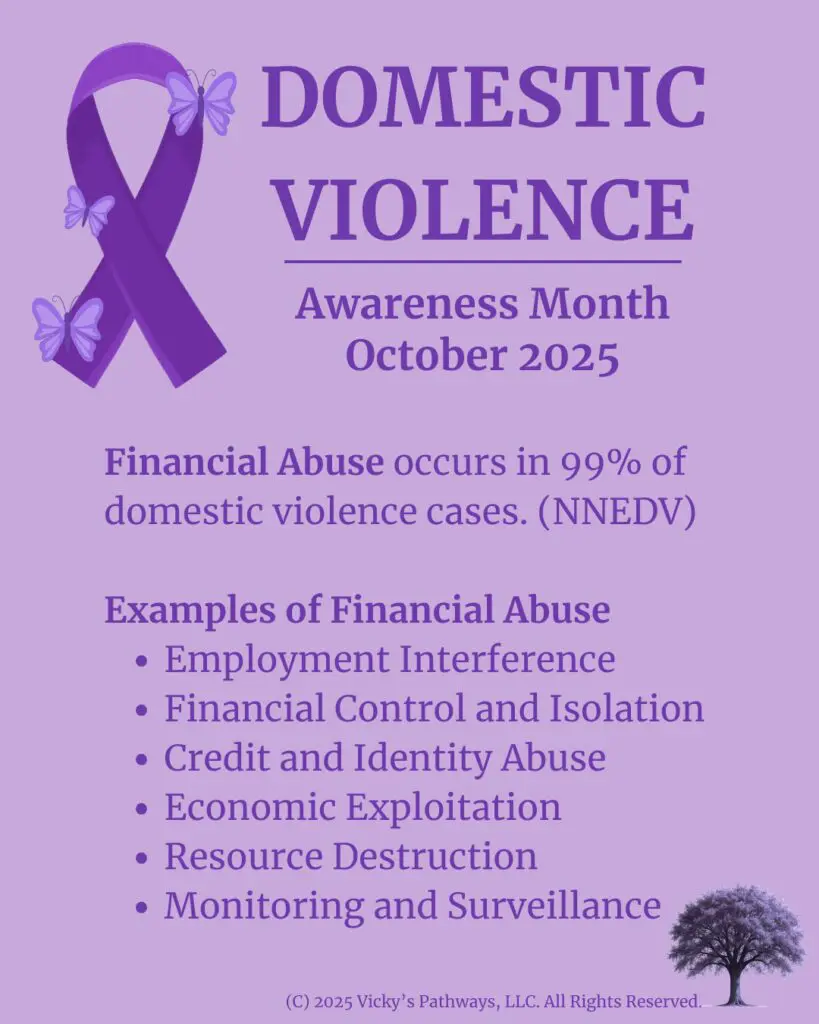
Here’s a startling statistic: Financial abuse occurs in 99% of domestic violence cases (National Network to End Domestic Violence, NNEDV).
When most people think about domestic violence, they picture physical harm. But financial abuse – controlling someone’s money, sabotaging their employment, destroying their credit – is one of the most powerful tools abusers use to trap their victims.
We know money is often used as a tool of power and control. That’s why this October, I’m using my platform to raise awareness about financial abuse. Because financial wellness isn’t just about building wealth – it’s about ensuring you have the safety, autonomy, and resources to live free from control.
What is Financial Abuse?
Financial abuse is a form of domestic violence where one person controls another person’s ability to acquire, use, or maintain economic resources.
It’s about power and control, not money.
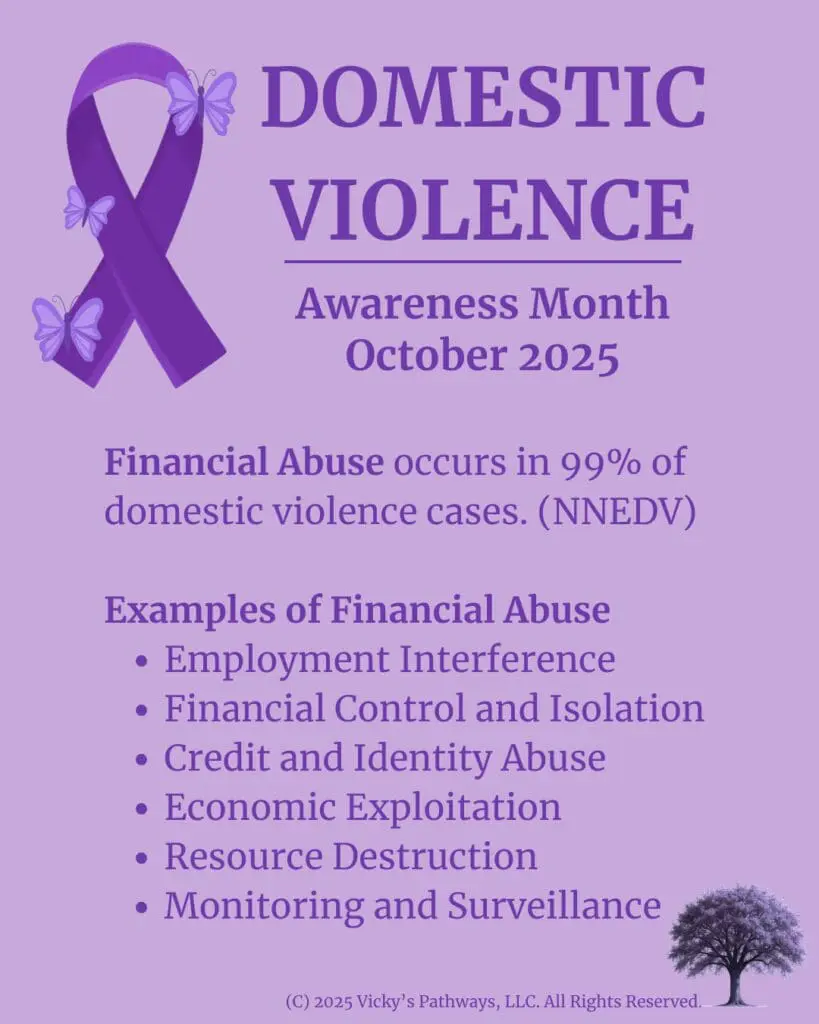
Let me break down the six primary types:
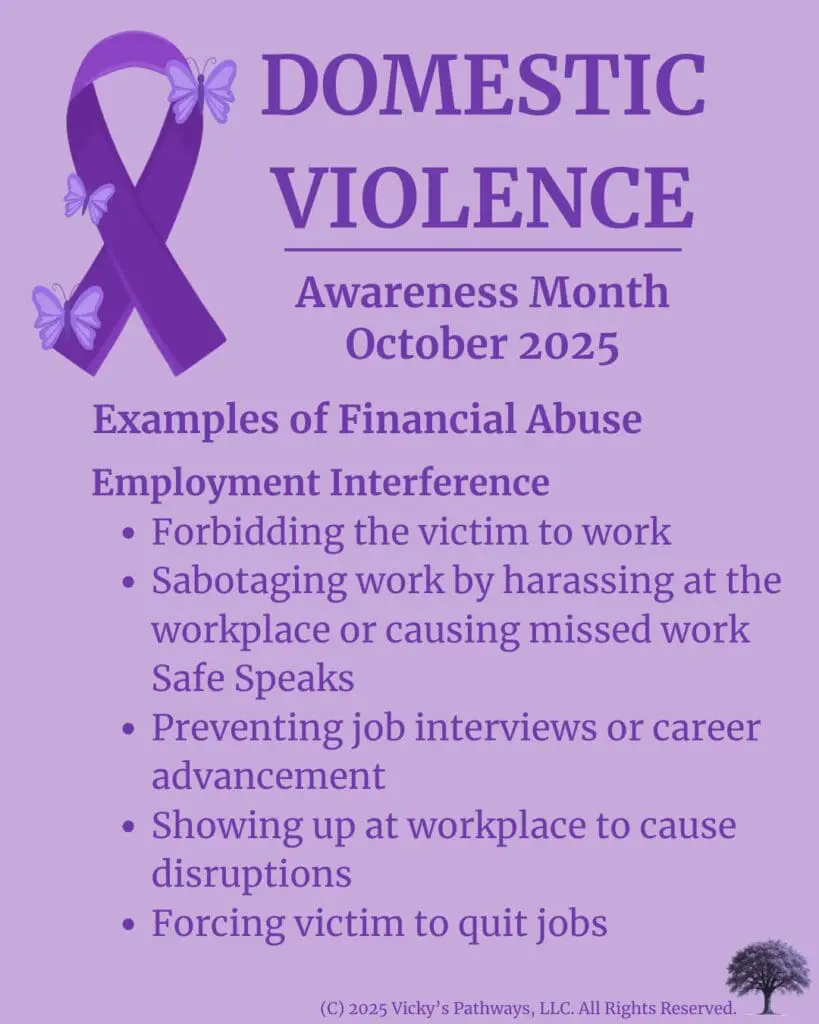
1. Employment Interference
According to the California Department of Financial Protection and Innovation, 96% of employed domestic violence victims experience problems at work due to abuse.
This looks like:
- Preventing someone from getting or keeping a job
- Sabotaging work through excessive calls, texts, or showing up at the workplace
- Causing someone to miss important meetings or opportunities
- Harassing coworkers or supervisors
- Forcing someone to quit
Your job isn’t just income – it’s your pathway to independence and safety.
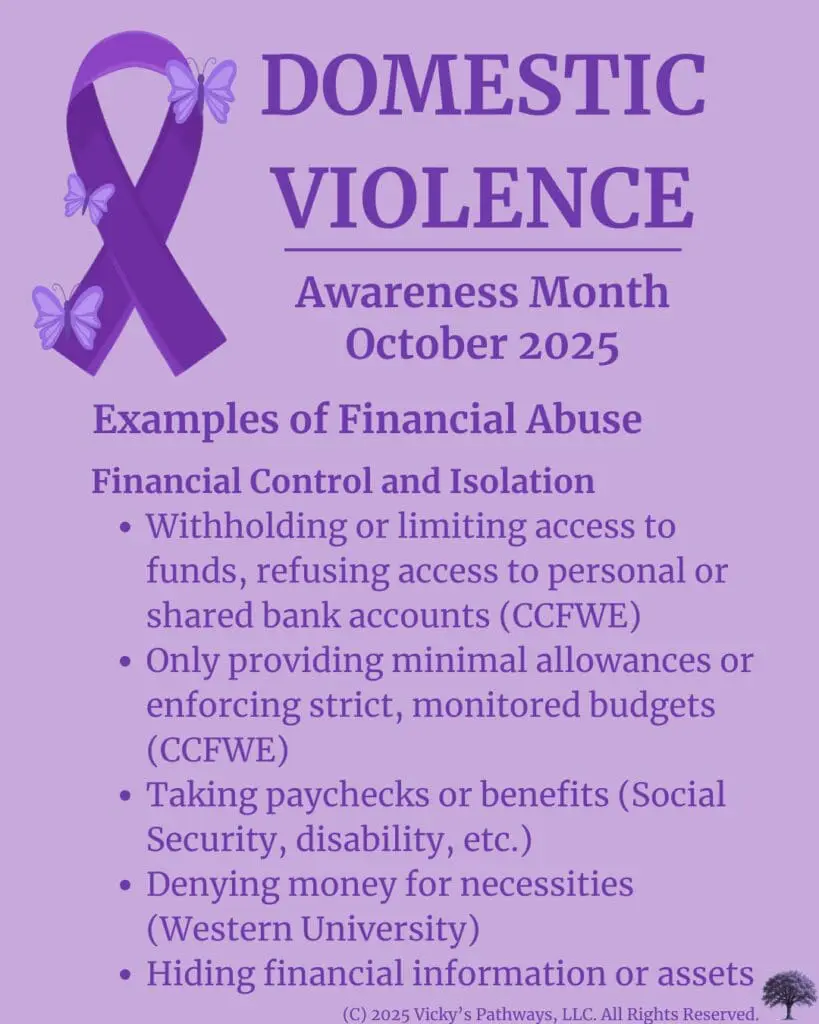
2. Financial Control and Isolation
This is the most recognized form of financial abuse, but people often don’t realize it’s happening to them:
- Withholding or limiting access to money, even money you’ve earned
- Giving “allowances” and requiring receipts for everything
- Refusing to let you see bank statements or financial information
- Making all financial decisions without input
- Taking your paychecks, benefits, or government assistance
In healthy relationships of all types, both people have access to financial information and participate in money decisions when appropriate. You have the RIGHT to know about finances that affect you.
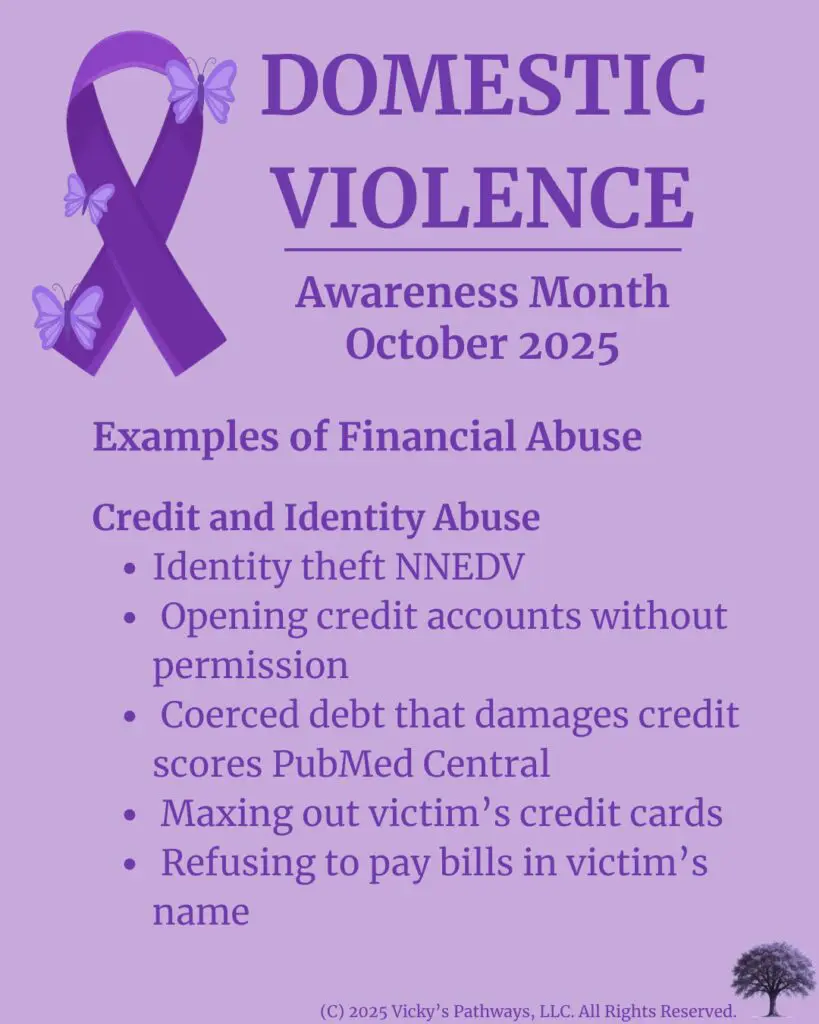
3. Credit and Identity Abuse
This type of abuse can haunt survivors for years:
- Opening credit accounts in your name without permission
- Maxing out your credit cards
- Refusing to pay bills in your name, destroying your credit
- Identity theft – using your personal information for loans, accounts, etc.
- Forcing you to cosign for loans or credit
Action step: Check your credit report regularly at annualcreditreport.com (it’s FREE). Look for accounts you didn’t open, inquiries you didn’t authorize, debts that aren’t yours.
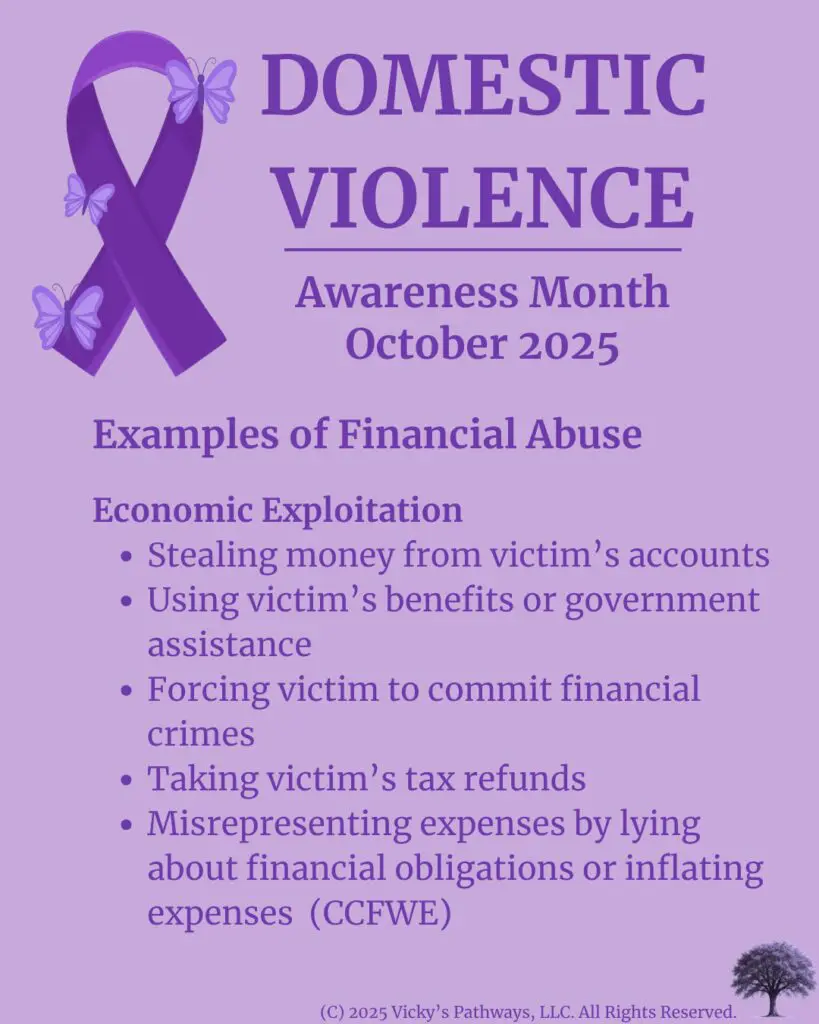
4. Economic Exploitation
This goes beyond control into outright theft:
- Stealing money from your accounts
- Using your benefits or tax refunds
- Forcing you to commit financial crimes (fraud, theft, etc.)
- Manipulating or lying about expenses
- Taking money meant for necessities
The only person responsible for financial abuse is the abuser. Not you. Never you.
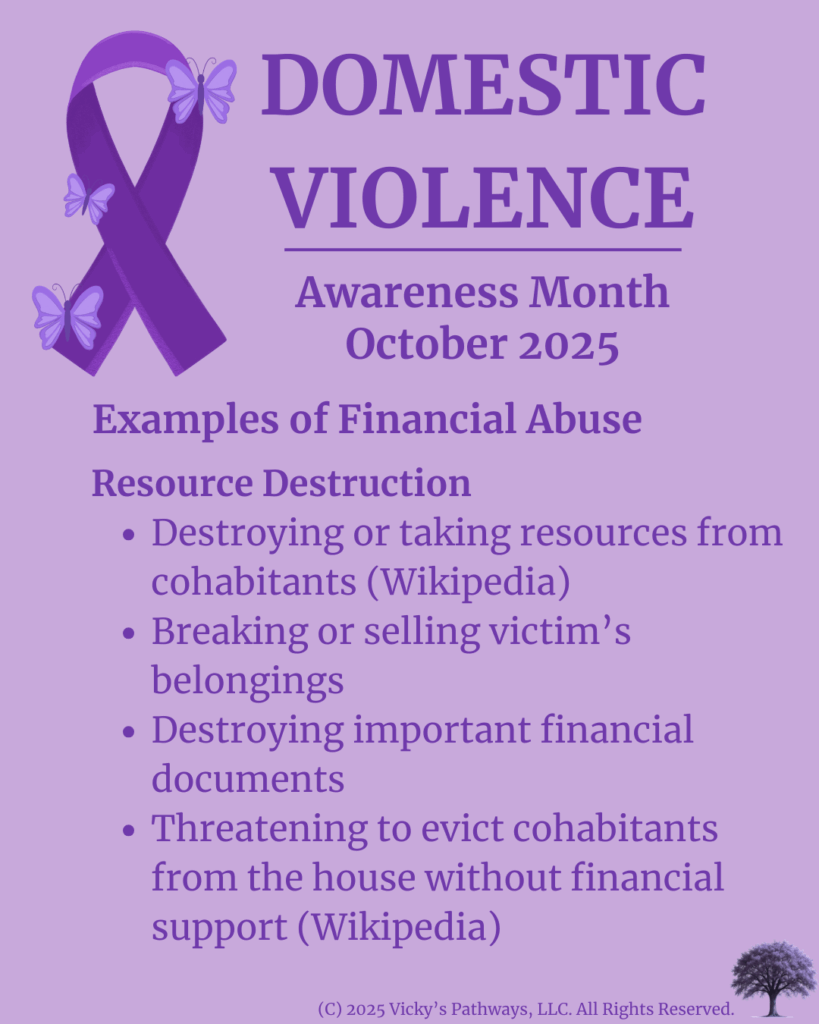
5. Resource Destruction
When someone destroys your belongings, they’re destroying your sense of security:
- Breaking or selling your property
- Destroying important documents (birth certificates, Social Security cards, etc.)
- Threatening eviction or removing you from housing
- Damaging things you need (car, phone, work equipment)
But here’s the truth: Things can be replaced. Documents can be reissued. Credit can be rebuilt. What can’t be replaced is your life, your safety, and your worth.
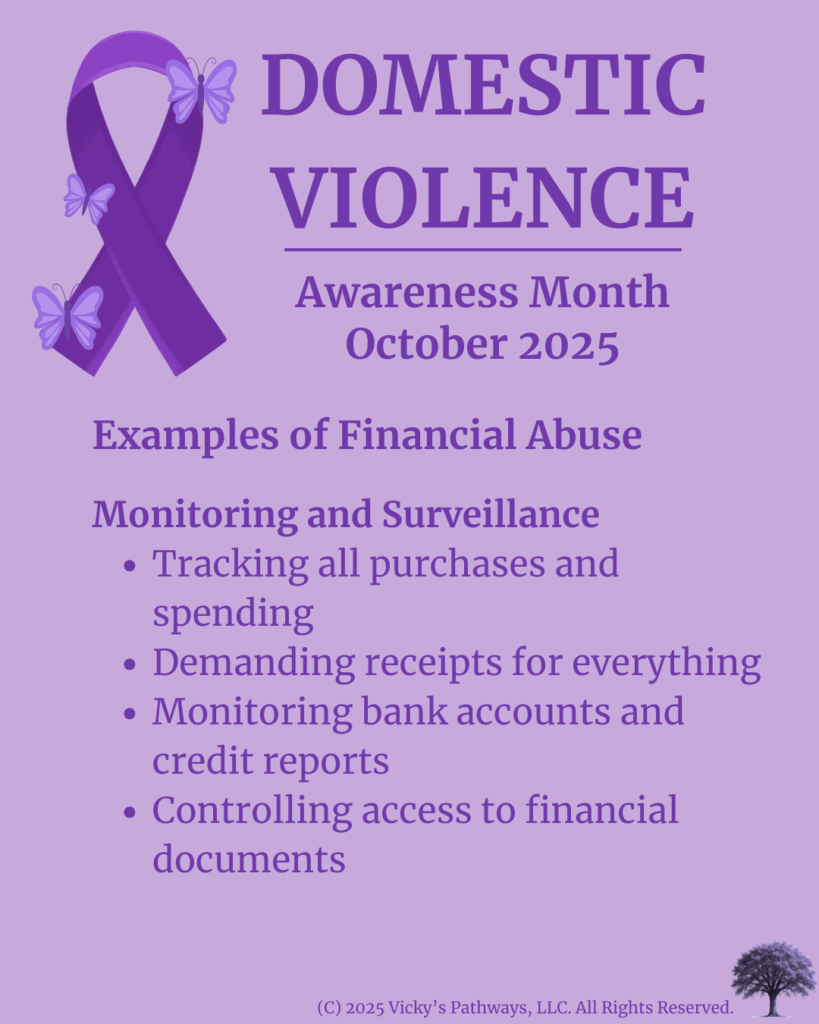
6. Monitoring and Surveillance
In our digital age, this has become increasingly sophisticated:
- Tracking all purchases and spending
- Demanding receipts and explanations for everything
- Monitoring bank accounts and credit reports
- Controlling access to financial documents
- Using apps or shared accounts to surveil spending
Financial privacy isn’t about hiding things – it’s about maintaining your dignity and autonomy as an adult human being.
Who is Affected by Financial Abuse?
Financial abuse doesn’t discriminate. Here’s what the research shows:
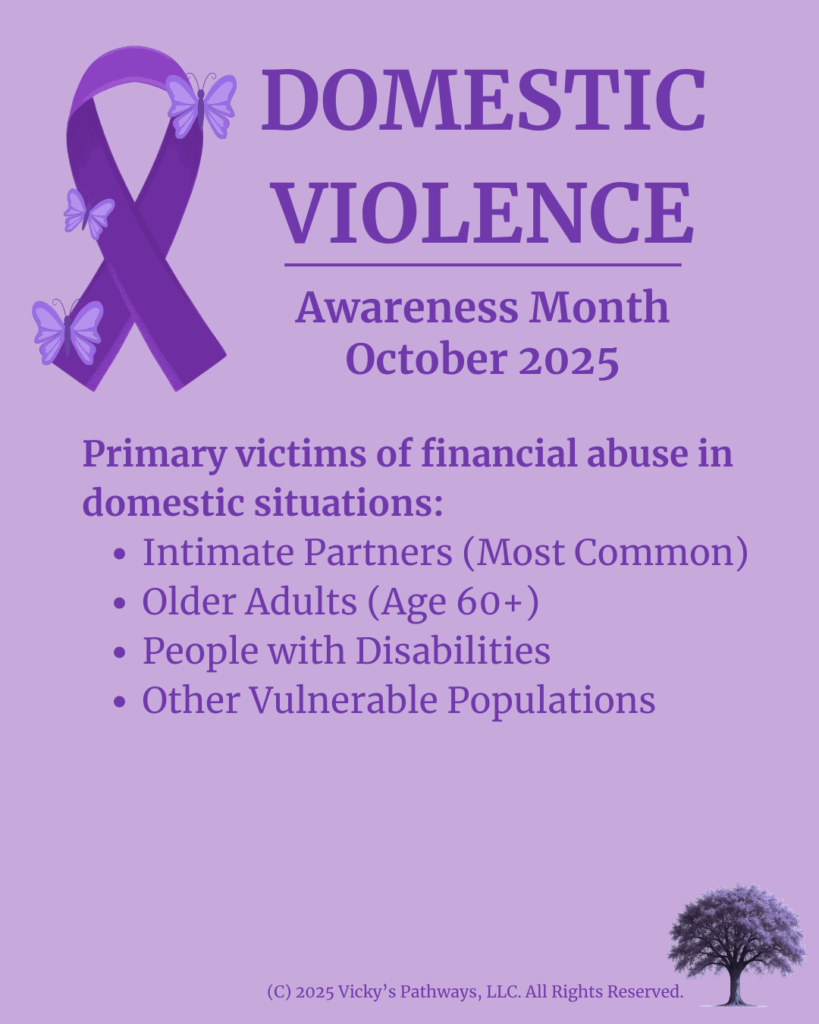
Intimate Partners – The most common scenario, occurring in 99% of domestic violence cases (NNEDV). While women are disproportionately affected, men can also be victims.
Older Adults (60+) – Approximately 1 in 10 older adults experience abuse (National Center on Elder Abuse). Seniors lose over $2.6 billion annually to financial exploitation (MetLife Mature Market Institute). Family members are perpetrators in nearly half of elder abuse cases (National Adult Protective Services Association).
People with Disabilities – Individuals with physical, intellectual, cognitive, or mental health disabilities face elevated risk and often experience multiple forms of abuse (Office for Victims of Crime). They may be more dependent on caregivers and face barriers to reporting.
Other Vulnerable Populations:
- Young adults in their first relationships
- Immigrants facing language or legal barriers
- LGBTQ+ individuals who may have less family support
- Anyone experiencing social isolation or economic insecurity
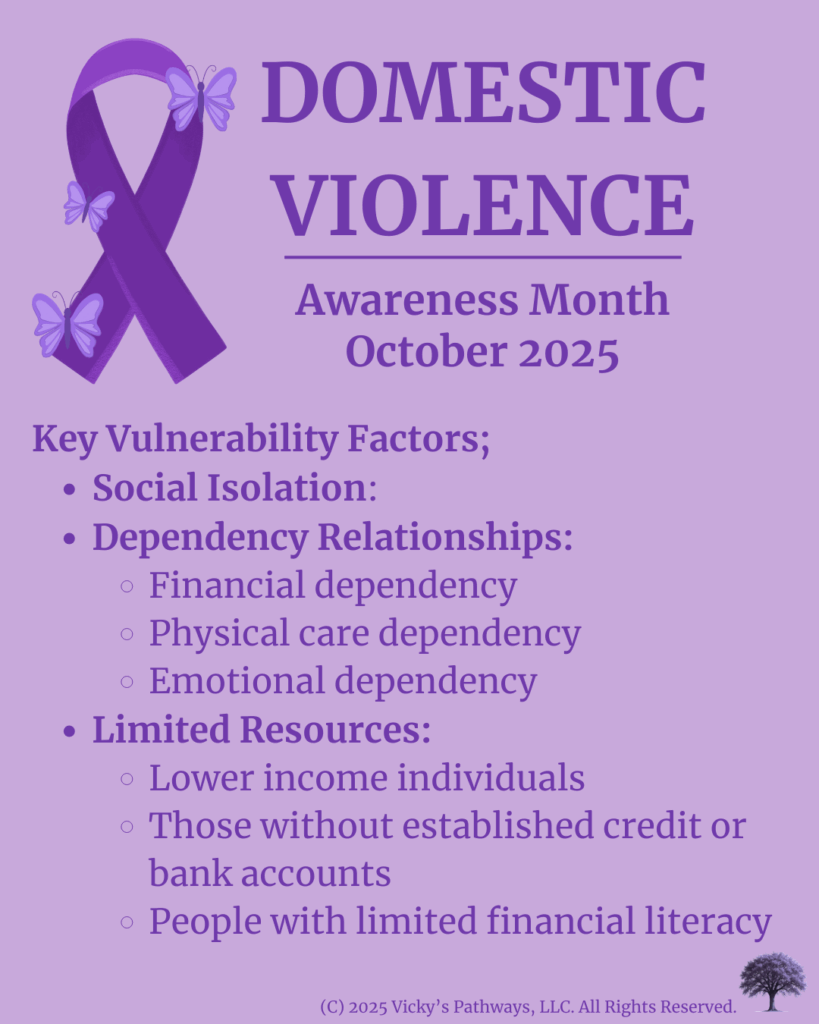
- People highly dependent on others for Financial, Physical, or emotional support
- Lower income individuals
- Those without established credit or bank accounts
- People with limited financial literacy
What makes someone vulnerable isn’t weakness – it’s circumstance. Dependency relationships, social isolation, and limited resources create environments where abuse can thrive. We all have vulnerabilities. It’s part of being human.
The Sad Truth about Why Financial Abuse is So Effective in Domestic Violence
Financial abuse is one of the most powerful methods of trapping someone in an abusive relationship because:
- It creates dependency – Without money or employment, leaving feels impossible
- It destroys the ability to rebuild – Ruined credit, employment gaps, and debt make starting over extremely difficult
- It’s invisible – Unlike physical abuse, there are no visible scars
- It’s often not recognized – Many victims don’t realize financial control IS abuse
- It persists after leaving – The financial damage continues long after the relationship ends
Research shows that concerns about financial stability are one of the top reasons people stay in or return to abusive relationships (National Network to End Domestic Violence).
Resources and Help
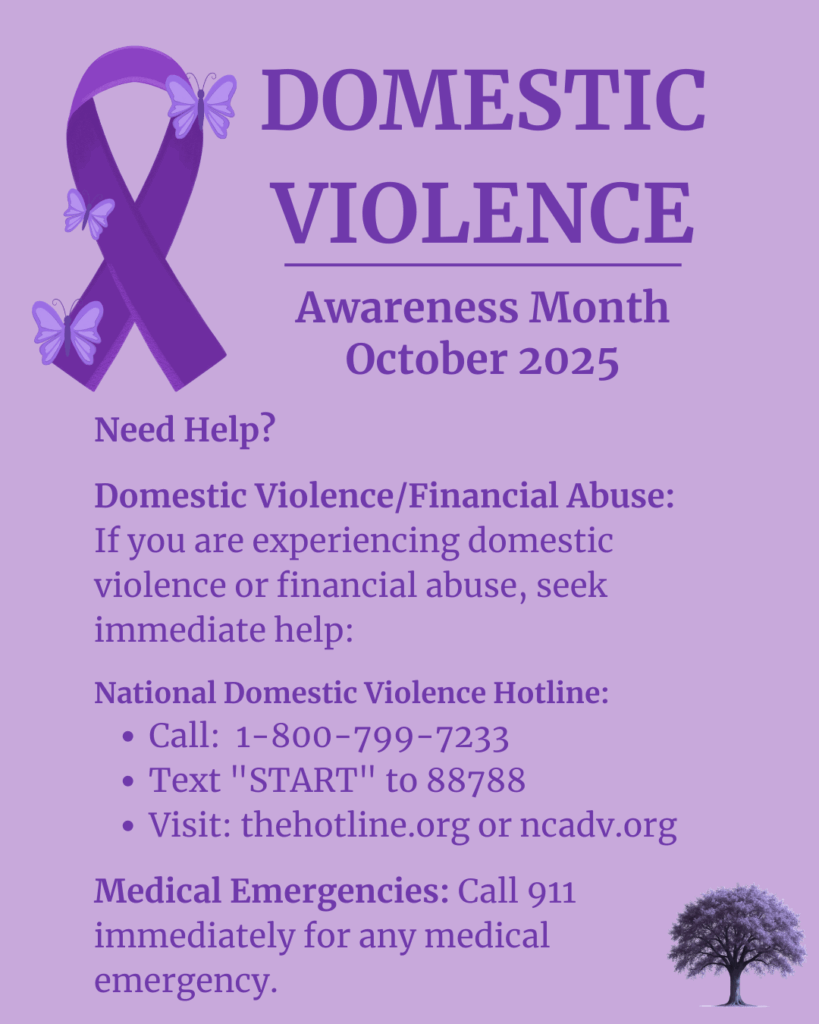
If you recognize these signs in your relationship (whether intimate, a caregiver role, or other), please know that help is available. You deserve financial freedom and safety.
National Domestic Violence Resources:
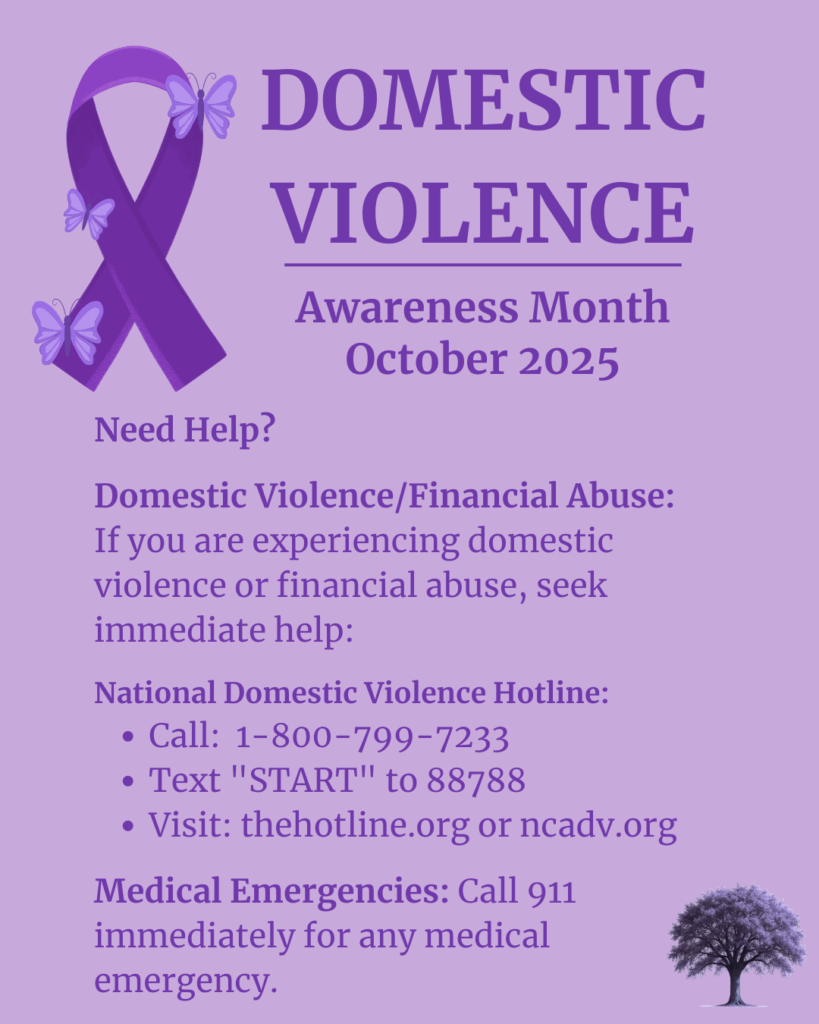
National Domestic Violence Hotline:
- 📞 Call: 1-800-799-7233
- 📱 Text START to 88788
- 💬 Chat: thehotline.org
- 📞 TTY: 1-800-787-3224
- Available 24/7, free and confidential
Elder Abuse Resources:
- ☎️ Eldercare Locator: 1-800-677-1116
- 🌐 eldercare.acl.gov
- 🌐 National Adult Protective Services: napsa-now.org
Mental Health Support:
Suicide and Crisis Lifeline:
- 📞 Call: 988
- 📱 Text: 988
- 💬 Chat: 988lifeline.org
- 💬 Deaf/HoH support available 988lifeline.org
Medical Emergencies:
- 🚨 Call 911 immediately
Only 1 in 44 cases of financial abuse is reported (National Adult Protective Services Association). If you need help, you are not alone. Trained professionals are ready to support you.
Recovery is Possible
Survivors successfully:
- Rebuild credit from nothing
- Restart careers after years away
- Create the financial security they thought they’d lost forever
- Reclaim their financial autonomy and dignity
Recovery takes time, but it is possible. Your financial future is NOT destroyed forever.
Financial independence IS possible. Your safety IS possible. Your healing IS possible.
Financial Recovery & Education Resources:
Allstate Foundation Purple Purse
- Website: purplepurse.com
- Free financial empowerment curriculum specifically designed for DV survivors
- “Moving Ahead Through Financial Management” program
National Endowment for Financial Education (NEFE)
- DV-specific financial resources at nefe.org
- Free tools for rebuilding after financial abuse
NNEDV Economic Justice Project
- Website: nnedv.org/content/economic-justice
- Connects survivors to financial counseling and legal aid
- Resources for dealing with coerced debt
National Foundation for Credit Counseling (NFCC)
- 1-800-388-2227
- Free or low-cost credit counseling
- Can help dispute fraudulent accounts and rebuild credit
Legal Aid for Financial Abuse
- Legal Services Corporation: lsc.gov/find-legal-aid
- Free legal help for low-income survivors dealing with debt, credit damage, or financial exploitation
Workplaces Respond to Domestic Violence
- Website: workplacesrespond.org
- Resources for employment issues and workplace safety planning
What I’m Doing This October
Throughout October, I’ll be sharing educational content on my Facebook page about:
- Recognizing specific types of financial abuse
- Understanding vulnerability factors
- Resources and support options
I’m asking you to do three things:
- Follow along and learn – Even if this doesn’t affect you directly, understanding financial abuse makes you part of the solution
- Share this information – You never know who in your network needs to hear this. You might save someone’s life.
- Click Like & Engage with the post – This will boost the post’s algorithm making it accessible to more people.
Why Financial Coaches Should Talk About This
Some of you might wonder why I’m dedicating so much time and effort on my platform to domestic violence awareness instead of just teaching financial concepts like budgeting and investing.
Here’s why: Financial wellness includes financial safety.
I can teach you all the budgeting strategies in the world, but if someone is controlling your money, sabotaging your work, or destroying your credit, those strategies won’t help. You can’t build wealth when someone is actively tearing down your financial foundation.
As a financial coach, my role is to teach money management and financial wellness. Part of that includes raising awareness about financial abuse so people can recognize warning signs and know where to turn for support.
Your financial autonomy matters. Your safety matters. YOU matter.
Final Thoughts
Financial abuse thrives in silence and isolation. But with knowledge, resources, and community support, we can break those cycles.
💜 The purple ribbon of Domestic Violence Awareness Month represents more than awareness – it represents hope, healing, and the promise that abuse doesn’t have to be a life sentence. 💜
If you’ve read this far, thank you. 💜 Thank you for caring enough to learn. 💜Thank you for being willing to recognize uncomfortable truths.
Thank you for being part of the solution.
Save this post. Share this post. Keep these resources accessible.
You never know when you or someone you love might need them.
Together, we can end financial abuse. 💜
About the Author: I am Vicky Oberlander, Strategic Financial Coach & Owner of Vicky’s Pathways, LLC.
I love teaching about personal finances to individuals just like you! I provide strategic financial coaching helping individuals and couples take control of their finances so they can quit stressing about money and live with intention and purpose.
Connect with me: Facebook | Instagram | YouTube | LinkedIn
See my Digital Business Card with additional resources!
Let’s stay connected! Email me at vickyspathways@gmail.com
If you or someone you know needs immediate help, please don’t wait.
Call the National Domestic Violence Hotline at 1-800-799-7233 or text START to 88788. In an emergency, call 911.
Share This Post:
- Financial Abuse: What You and Your Loved Ones Need to Know This Domestic Violence Awareness Month
Related Posts:
- Financial Boundaries & Behavioral Risk Management: How to Say “No” and Protect Your Money
- My Journey to Rebuilding Self-Trust